Craft & Fabrication
-
Dimensions: 55cm x 55cm (22" x 22")
- 100% polyester case
- Fabric weight: 8.1 oz./yd.² (275 g/m²)
- Linen feel fabric
- Hidden zipper
- Machine-washable case
- Shape-retaining 100% polyester insert included (hand-wash only)
Modern Translation:
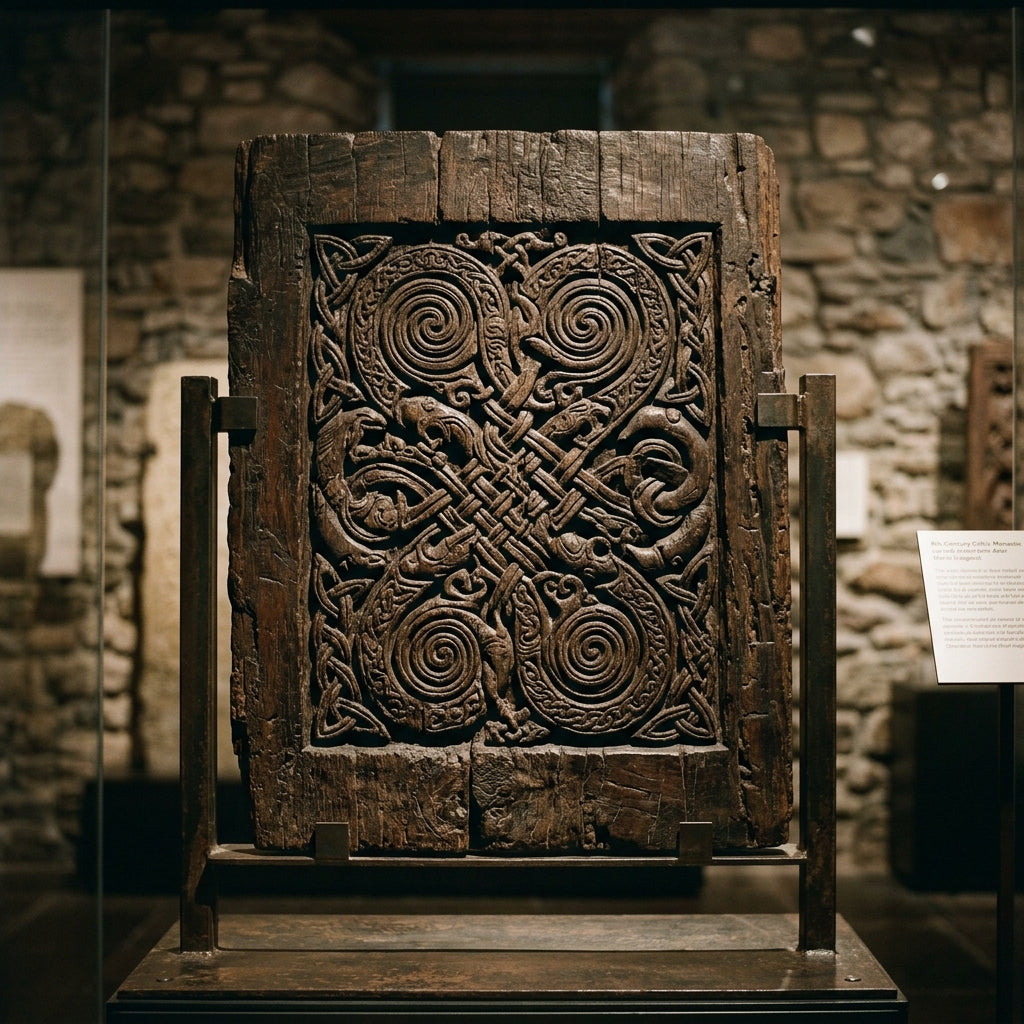
An earthy, intricate twist on eternal knotwork, this variation infuses deep warmth and historical structure into the contemporary home.
The Endless Ribbon
Rooted deeply in early medieval Insular art, Celtic knotwork is defined by its mathematical complexity and completely unbroken, continuous lines. Having no definitive beginning or end, it originated not merely as a decorative motif, but as a profound theological symbol representing the eternal, interwoven nature of life, faith, and the physical world.
Monastic Masterpieces
This intensely rigorous geometric style reached its absolute zenith within isolated Irish monasteries during the 8th century. Monks spent decades meticulously hand-drawing these dizzyingly complex, interlaced ribbons onto calfskin vellum to create illuminated manuscripts like the legendary Book of Kells, transforming written gospels into almost hypnotic visual meditations.
The High Crosses
The knotwork wasn't confined strictly to two-dimensional parchment. It was heavily carved into the massive, towering stone "High Crosses" scattered across the brutal, wind-swept Irish landscape. These monumental stone structures served as both territorial markers and immense outdoor altars for religious gatherings.
Viking Influence
As Norse Vikings began aggressively raiding and eventually settling in Ireland, their own distinct 'animal-interlace' art styles collided violently and creatively with traditional Irish geometry. This fusion birthed the 'Hiberno-Norse' style, proving the knotwork was a highly adaptable, evolving language rather than a static tradition.
The Celtic Revival
After centuries of obscurity, the 19th-century 'Celtic Revival' saw a massive, enthusiastic resurgence of this ancient geometry. As Ireland aggressively reclaimed its national identity, intricate knotwork exploded back into mainstream design, appearing on everything from high-end silver jewelry to grand civic architecture.
Architectural Weight Today
In modern interior design, Celtic knotwork provides an incredibly strong, rigid structural anchor. Its interlocking, maze-like complexity offers a heavy, masculine contrast to soft furnishings, introducing an immediate sense of deep historical gravity and unwavering permanence into any sophisticated space.