Craft & Fabrication
-
Dimensions: 55cm x 55cm (22" x 22")
- 100% polyester case
- Fabric weight: 8.1 oz./yd.² (275 g/m²)
- Linen feel fabric
- Hidden zipper
- Machine-washable case
- Shape-retaining 100% polyester insert included (hand-wash only)
Modern Translation:
Introducing inverse contrasts and broader interlocking shapes, this variation acts as a perfect maximalist counter-weight to modern solid-color minimalism.
Deep in the Heart of the Congo
To understand this striking geometric pattern, we need to travel to the absolute center of the African continent—specifically to the modern-day Democratic Republic of the Congo. In the early 1600s, around the year 1625, an incredibly powerful and highly organized civilization known as the Kuba Kingdom was founded here. Because they were geographically isolated by dense forests and massive rivers, the Kuba developed a society where intricately woven cloth wasn't just clothing—it was the very foundation of their local economy. In fact, at the height of the kingdom, these textiles were so valuable they were actually used as legal currency.
The Architecture of Raffia Velvet
If you were to run your hand across an authentic piece of Kuba cloth, you would immediately notice it feels exactly like plush velvet. But there is no silk or cotton here. The men of the Kuba Kingdom harvested the harsh, tough leaves of the local Raffia palm tree, stripping them down to weave a stiff base fabric on wooden looms. The women then took over, using sharp iron needles to pull dyed strands of fiber through the base cloth, clipping them down to a fraction of an inch. This painstaking "cut-pile" technique creates a dense, raised geometric surface that makes this style instantly recognizable anywhere in the world.
Reading the Geometric Code
When you look at this pattern today, you probably just see beautiful zig-zags, diamonds, and sharply angled lines. However, to the Kuba people, this was a highly advanced visual language. Because they did not rely on written words, these complex geometric grids were used to communicate vast amounts of societal information. By looking at the specific arrangement of the angles, a person living in the 1700s could instantly tell the weaver's social status, their exact clan, and whether they were royalty. It is, quite literally, a woven encyclopedia.
The Magic of the Camwood Tree
Traditional Kuba patterns are characterized by their colors—particularly deeply saturated, rusty reds and dark, earthy browns. These aren't just decorative color choices; they are rooted in deep local superstitions. The artisans achieved that signature deep red by grinding down the heartwood of the local camwood tree into a powder called "twool." In Kuba culture, twool wasn't just a dye; it was viewed as a genuinely magical substance. They believed it held immense protective powers, meaning that wearing a fabric dyed in twool was the equivalent of putting on a layer of spiritual armor against evil forces.
Burial and the Afterlife
Because these velvet-like textiles took months to create, they were far too valuable to wear on a normal Tuesday. They were brought out strictly for the most critical ceremonial milestones, particularly funerals. The Kuba firmly believed that in order to be recognized as a person of high status in the afterlife, you had to arrive looking the part. When a Kuba king or a wealthy dignitary died, they were not simply buried in dirt; they were wrapped in dozens, sometimes hundreds, of layers of this exact geometric fabric, ensuring their wealth and influence traveled with them into eternity.
Matisse and the Modernist Cut-Outs
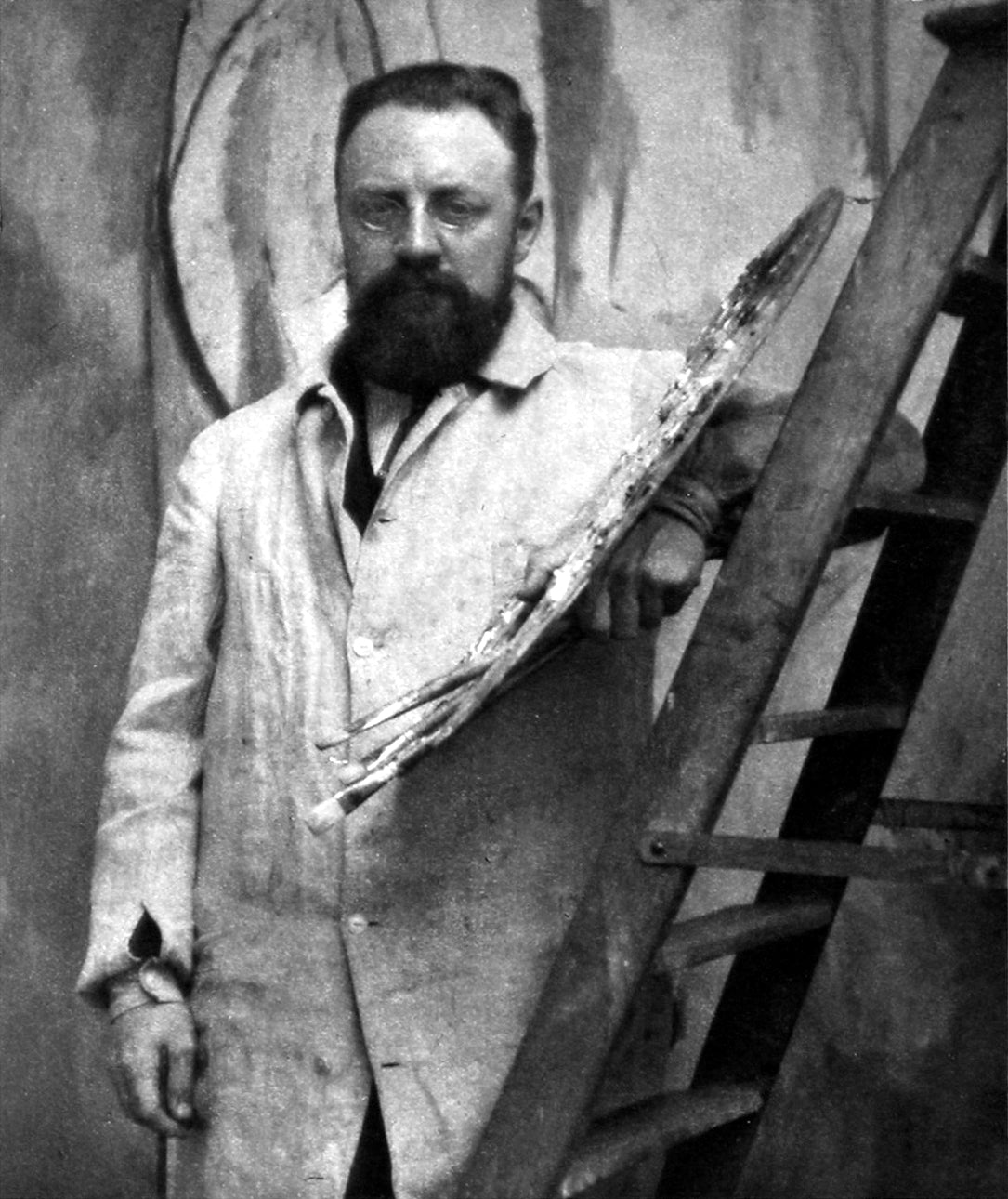
The visual impact of Kuba textiles eventually resonated far beyond Central Africa, profoundly altering Western modern art in the 20th century. The legendary French painter Henri Matisse amassed a massive collection of Kuba cloth, hanging these geometric raffia textiles covering the walls of his studio. He referred to them as his "working library." As his health declined in the 1940s and he transitioned from painting to his famous paper cut-out method, Matisse relied heavily on the flat, rhythmic, interlocking geometry of the Kuba cloth. The instinctive geometry found in this ancient African visual language directly laid the groundwork for one of the most famous eras of mid-century modern art.