Craft & Fabrication
-
Dimensions: 50cm x 50cm (20" x 20")
- 100% polyester case
- Fabric weight: 8.1 oz./yd.² (275 g/m²)
- Linen feel fabric
- Hidden zipper
- Machine-washable case
- Shape-retaining 100% polyester insert included (hand-wash only)
Modern Translation:
Anchor your decor with the extreme mathematical precision and deep, romantic gravity of an authentic Safavid masterpiece. Reimagined onto premium, low-maintenance spun polyester, this pillow perfectly showcases the intensely complex, highly detailed 'fish pattern' of the ancient Herati rug without the fragile fragility of woven silk. It is highly versatile—pair it seamlessly with modern industrial loft furniture or stark eclectic minimalism to add an immediate, striking layer of timeless artistry.
The Royal Workshops of Isfahan
The zenith of Persian carpet weaving occurred during the 16th-century Safavid Dynasty. Under Shah Abbas the Great, carpet making was elevated from a nomadic craft into a massive, state-sponsored fine art. The court established massive royal workshops in Isfahan, heavily intertwining weaving with master miniature painting and mathematics.
The Anatomy of the Herati
The 'Herati' motif, often called the 'Mahi' or fish pattern, is perhaps the most enduring structural design in Persian weaving. Originating in the Khorasan region, it systematically features a central stylized rosette totally enclosed within a sharp rhombus, flanked instantly on all four sides by sweeping, aggressively curved acanthus leaves.
The Mathematics of Paradise
In Persian tradition, the carpet is fiercely allegorical, representing the 'Chahar Bagh'—the geometrically perfect, walled paradise garden. The Herati motif acts as the mathematical backbone of this philosophy, grounding the chaotic, infinite spread of vines and florals into a deeply calculated, symmetrical grid.
The Master Weaver's Knot
Authentic Herati carpets were structured using the asymmetrical Persian knot (Senneh knot). This technique allowed artisans to achieve insanely high knot densities (frequently over 500 knots per square inch). Master dyers achieved the motif’s deep, grounding indigos and rich madder-root reds through tightly guarded chemical sequences.
The Gilded Age Status Symbol
During the late 19th Century, as American Gilded Age wealth exploded, the Persian rug became the ultimate domestic status symbol. Wealthy industrialists heavily imported Herati-patterned carpets to blanket the floors of their massive new estates, permanently entrenching the Persian motif into Western definitions of extreme luxury.
The Modern Eclectic Anchor
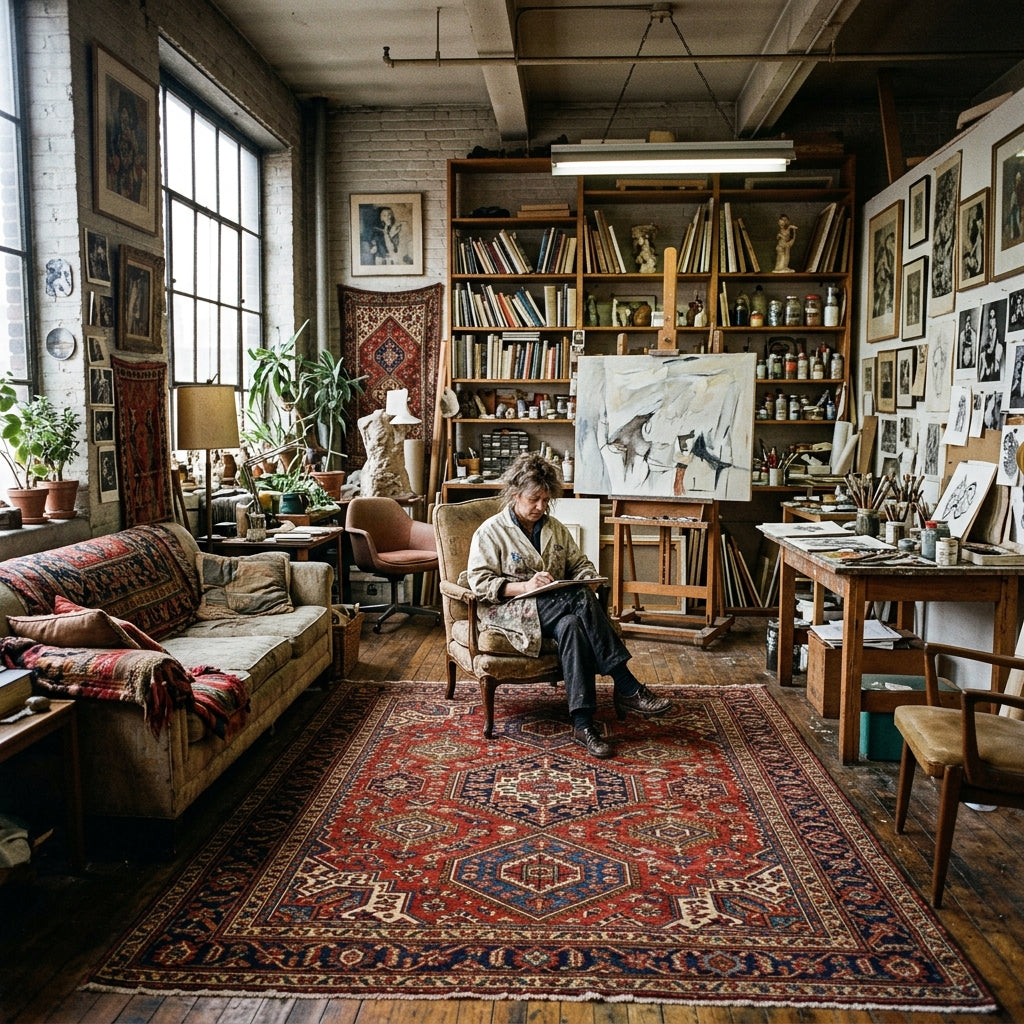
Today, the Herati motif continues its reign as the supreme architectural grounding element. In high-end contemporary interior design, these deeply structured, highly detailed patterns are frequently used to brilliantly anchor highly eclectic, modern minimalist spaces or industrial artist lofts, adding immediate, undeniable historic gravity to a room.