Craft & Fabrication
-
Dimensions: 50cm x 50cm (20" x 20")
- 100% polyester case
- Fabric weight: 8.1 oz./yd.² (275 g/m²)
- Linen feel fabric
- Hidden zipper
- Machine-washable case
- Shape-retaining 100% polyester insert included (hand-wash only)
Modern Translation:
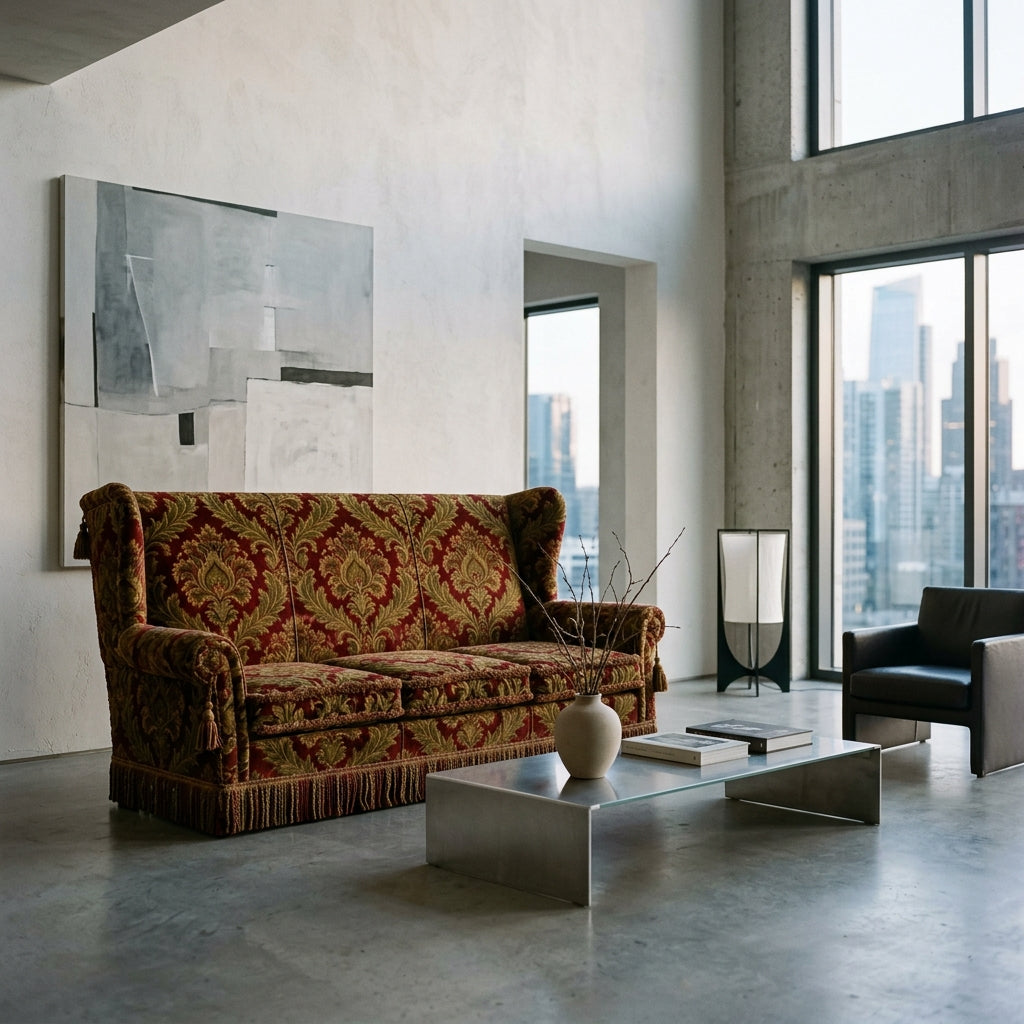
A commanding alternate colorway exploring the profound scale of Baroque weaving, pushing sharp contrasting tones to establish a massive architectural presence.
The Counter-Reformation Theater
Exploding violently across late 16th-century Rome, the Baroque movement was not merely an aesthetic shift, but a calculated, majestic theatrical weapon wielded by the Catholic Church. Desperate to intensely overwhelm the senses and combat the austere, stripped-down aesthetics of the Protestant Reformation, Italian architects and textile masters forged an incredibly dense, terrifyingly opulent visual grammar characterized by deep shadow, explosive motion, and massive, swirling acanthus leaves.
The Mastery of the Acanthus
At the absolute core of Baroque ornamentation lies the relentless, serpentine twisting of the ancient acanthus leaf. Unlike the quiet, structured classical foliage of the Renaissance, Baroque acanthus foliage aggressively invaded its surrounding space. It was deeply carved, heavily gilded, and densely woven into spectacularly massive brocades. These heavy, tumbling leaves created fierce illusions of physical depth, violently projecting golden highlights and crushing shadows into palatial interiors.
Textile Engineering of the 1600s
To rapidly spread the Baroque aesthetic, European weaving centers in massive commercial hubs like Genoa, Venice, and ultimately Lyon completely overhauled their massive wooden drawlooms. They engineered entirely unprecedented weaving techniques utilizing wrapped silver-gilt and raw gold bullion threads layered savagely over deeply dyed crimson and indigo silk velvets, creating textiles so catastrophically heavy and expensive they were treated exactly as high-revenue geopolitical assets.
Architectural Integration
The majesty of the Baroque pattern was that it actively refused to be contained. The textiles violently escaped the loom to directly inform the colossal stone carvings wrapping the terrifyingly grand twisted columns of St. Peter's Basilica, and spilled into the suffocatingly dense ceiling frescoes of Versailles. The patterns were specifically designed to interact fiercely with flickering candlelight, undulating and shifting visibly as absolute monarchs and high clergy moved through the grand halls.
Modern Regal Revival
The overwhelming power and gravity of 17th-century Baroque is achieving a radical renaissance in contemporary high-end interiors, utilized violently to contrast stark, minimalist architecture. By translating this terrifyingly opulent, incredibly dense European majesty onto our premium spun fabrics, this pillow instantly injects a room with pure, unapologetic nobility, functioning as an impossibly rich focal point inside a modern seating arrangement.