Craft & Fabrication
-
Dimensions: 55cm x 55cm (22" x 22")
- 100% polyester case
- Fabric weight: 8.1 oz./yd.² (275 g/m²)
- Linen feel fabric
- Hidden zipper
- Machine-washable case
- Shape-retaining 100% polyester insert included (hand-wash only)
Modern Translation:
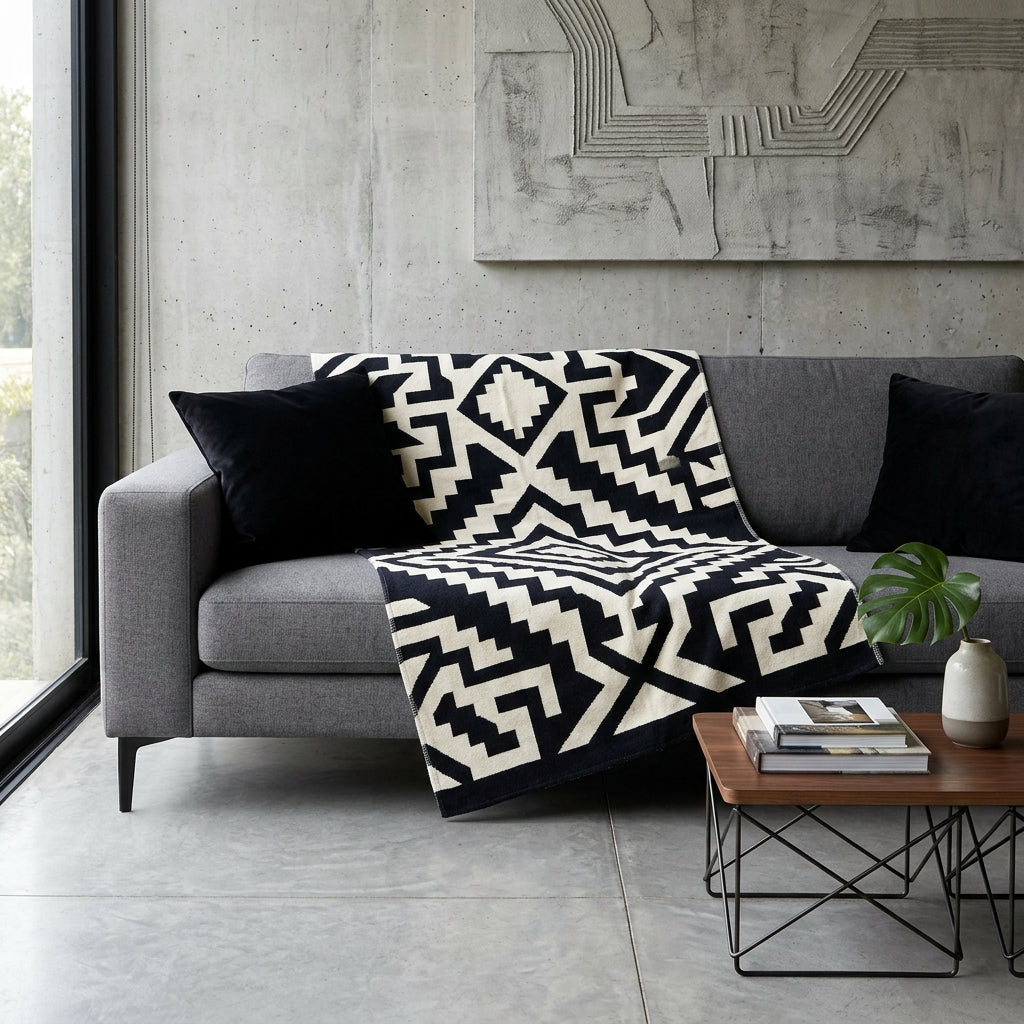
This premium throw pillow expertly translates the breathtaking, razor-sharp mathematics of 14th-century Aztec geometry into a powerful, high-contrast accent piece that instantly commands attention and breaks up modern minimalist spaces.
The Imperial Weavers of Mesoamerica
Thriving intensely deep in the monumental, heavily engineered island capital of Tenochtitlan, the Aztec (Mexica) empire established a textile culture of staggering, terrified complexity. Long before European interface, Mesoamerican weavers operated strictly on brilliant backstrap looms. These simple, terrifyingly brutally effective tools allowed weavers to violently pack threads with mathematical precision, creating textiles incredibly decorated with strict, profoundly sharp right-angled geometry directly reflecting their imposing step-pyramid temples.
Tribute and Power
In the heavily brutal structure of the massive Aztec economy, highly decorated woven mantas (large rectangular cloaks) functioned fiercely as literal, high-denomination imperial currency. The terrifyingly expansive tribute system fiercely demanded millions of these heavily mathematically woven garments annually from conquered provinces. The complexity and aggressive starkness of the geometric step-fret motifs immediately violently broadcast the absolute devastating wealth and precise military rank of the noble warrior class.
The Cult of Cochineal
The breathtakingly fierce color contrasts of Aztec textiles were fueled entirely by their ferocious command of natural, incredibly brutal dyes. Their most terrifyingly powerful asset was Cochineal: a brilliant, impossibly deep crimson red extracted violently by crushing millions of tiny parasitic insects meticulously cultivated directly on nopal cacti. This red, heavily contrasted sharply with raw un-dyed white cotton and deep indigo, created a violently sharp optical vibration across the heavily patterned garments.
The Spiritual Architecture
Unlike Western decorative aesthetics, Aztec geometry was heavily, fundamentally religious documentation. The ubiquitous, cascading step-fret motif (the xicalcoliuhqui) did not just decorate; it visually simulated the heavily terrifying movement of massive feathered serpents, intense lightning strikes across the Mexican valley, and the brutal, heavily engineered steps of the great temples towering violently above the water-locked city, bridging the mortal plane to the divine cosmos.
The Stark Contemporary Interface
Today, the wildly sharp, deeply unyielding mathematics of 14th-century Aztec geometry perfectly interfaces with the absolute hardest edges of fierce modern minimalist architecture. By rigorously translating this terrifyingly bold Mesoamerican heritage directly onto exceptionally premium textiles, this pillow instantly breaks the monotony of sterile modern rooms. It injects a profoundly bold, high-contrast pulse of ancient, monumental American history directly onto contemporary furniture.