Craft & Fabrication
-
Dimensions: 50cm x 50cm (20" x 20")
- 100% polyester case
- Fabric weight: 8.1 oz./yd.² (275 g/m²)
- Linen feel fabric
- Hidden zipper
- Machine-washable case
- Shape-retaining 100% polyester insert included (hand-wash only)
Modern Translation:
Channel the profound mysticism and hypnotic geometry of the ancient high crosses into your living space. Printed with absolute precision on crisp, low-maintenance spun polyester, this pillow delivers the incredibly intricate, unbroken 'endless ribbon' look of early medieval knotwork. It is the perfect architectural accent—drop it onto a streamlined contemporary chair or a dark leather sofa to instantly inject a deep, mesmerizing layer of historical gravitas without sacrificing modern elegance.
The Monastic Golden Age
Originating in the isolated, windswept monasteries of 8th-century Ireland and Scotland, Insular Art represents a brilliant, highly distinctive fusion of Celtic, Anglo-Saxon, and Mediterranean aesthetics. During Europe's turbulent Early Medieval period, these isolated monks became the ultimate preservers of mathematical artistry and complex ornamentation.
The Endless Line
The defining feature of Insular aesthetics is the 'interlace', or Celtic knot. These are completely endless, unbroken geometric ribbons that visually possess no discernible beginning and absolutely no end. This infinite geometry was deliberately engineered by monks to represent the eternal, cyclical nature of time and the immense, labyrinthine complexity of the divine.
Vellum and Silver
This dizzying geometry was meticulously drawn onto calf-skin vellum in legendary illuminated manuscripts like the Book of Kells, using crushed lapis lazuli and gold leaf. Simultaneously, master metalworkers physically wove these exact knot formulas out of silver and gold to create regal artifacts like the Tara Brooch, displaying mastery across all mediums.
The High Crosses
Moving from pages to architecture, Celtic knots were aggressively carved deep into massive, weather-beaten stone 'High Crosses' across the Irish landscape. Here, the knotwork served to physically capture the shifting sunlight, creating stark shadows that made the heavy stone appear almost weightless and completely in motion.
The Celtic Revival
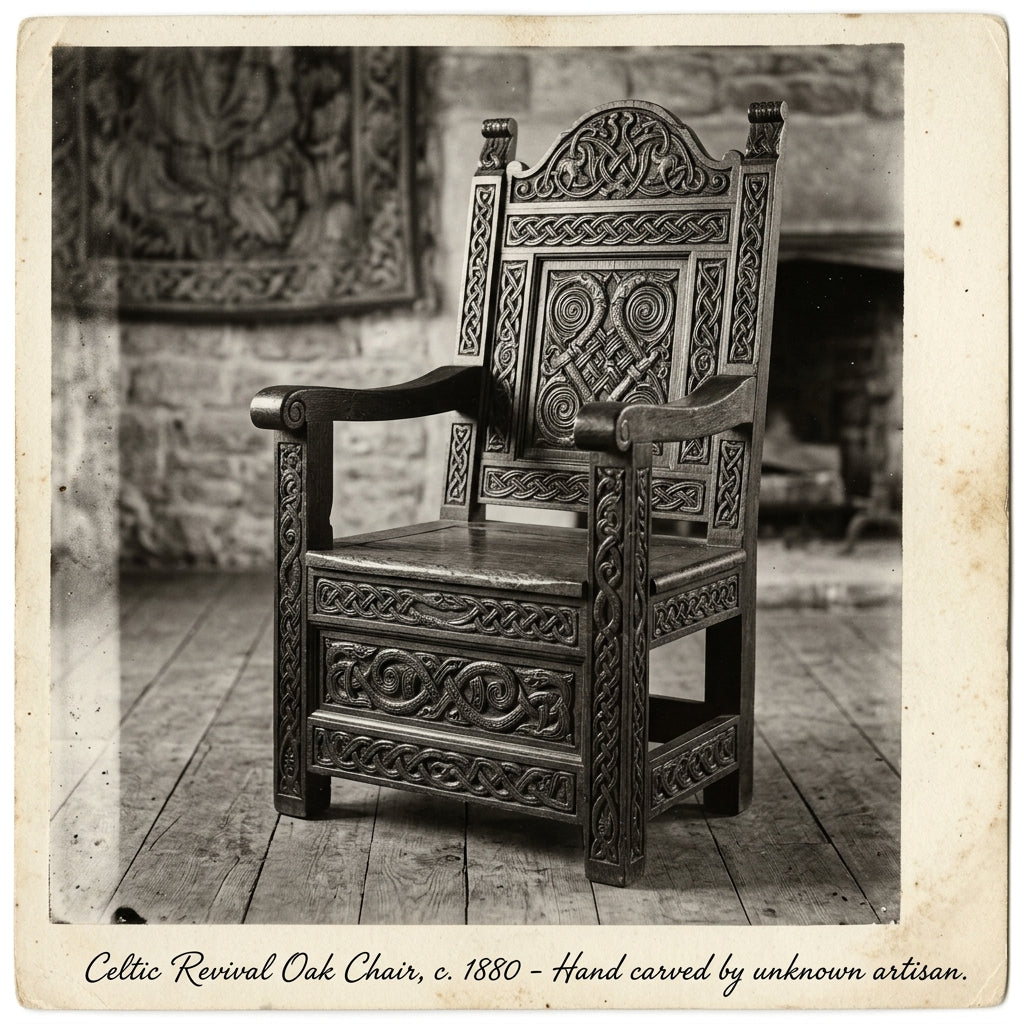
In the late 19th Century, as the world pushed toward heavy industrialization, the 'Celtic Revival' swept through Europe's decorative arts scene. Rejecting machine-made angles, designers began aggressively returning to the endless, highly organic, mesmerizing loops of Insular art to infuse architecture, metalwork, and typography with a sense of ancient magic.
Modern Structural Focus
Today, Celtic knotwork is experiencing a massive, sleek aesthetic revival in contemporary interior design and premium jewelry. Stripped of heavy rustic colors, the purely structural, interlocking geometry of the knot is heavily utilized by modern high-end designers as a deeply meditative, hypnotic focal point to add intense architectural complexity to minimalist spaces.