Craft & Fabrication
-
Dimensions: 50cm x 50cm (20" x 20")
- 100% polyester case
- Fabric weight: 8.1 oz./yd.² (275 g/m²)
- Linen feel fabric
- Hidden zipper
- Machine-washable case
- Shape-retaining 100% polyester insert included (hand-wash only)
Modern Translation:
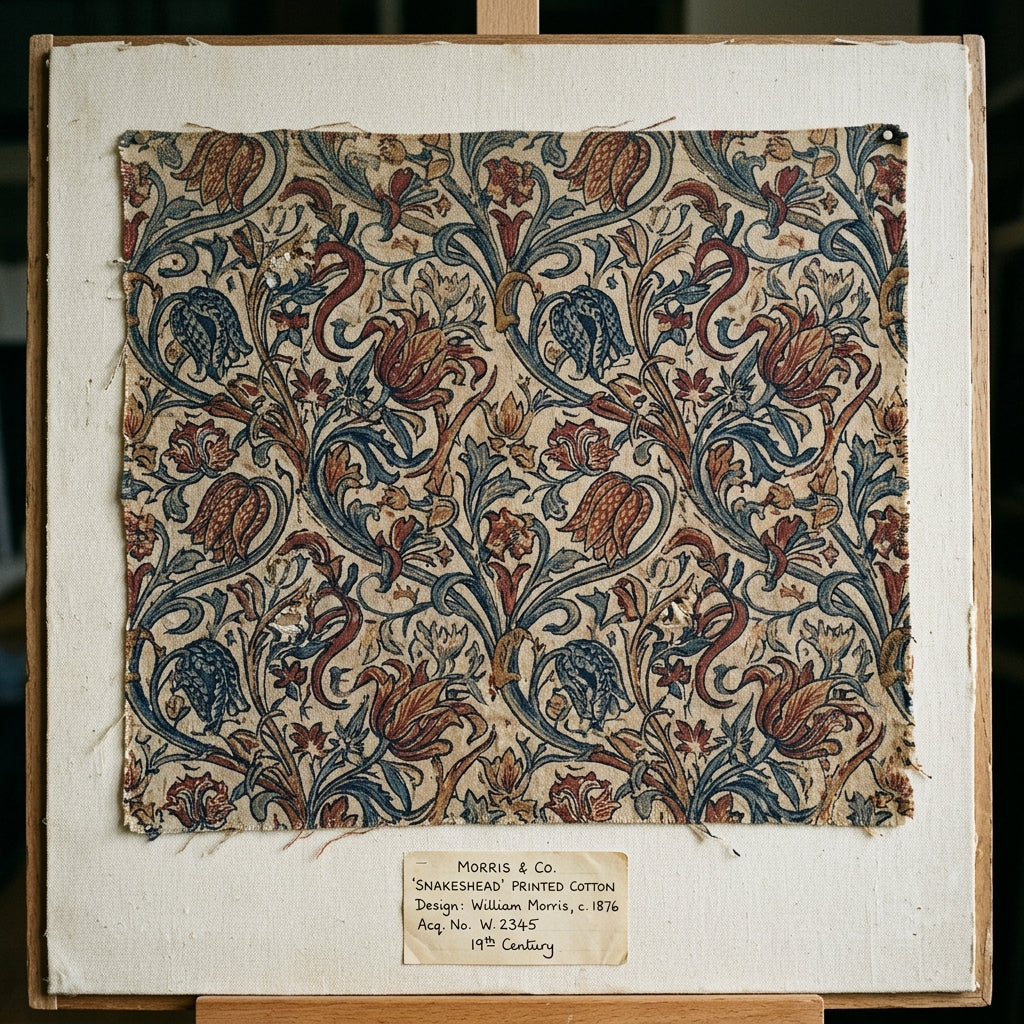
Bring the organic maximalism of the British Arts and Crafts movement into your home with this timeless textile. Expertly crafted from premium, ultra-smooth spun polyester, this tactile accent pillow resists wrinkling while retaining its vibrant botanical hues. It serves as an incredibly powerful architectural anchor—seamlessly softening strict minimalist spaces or enhancing a curated cottage-core interior when styled alongside solid natural tones.
The Hand-Crafted Rebellion
In the late 19th century, as the smog-choked factories of the Industrial Revolution flooded Victorian England with cheap, mass-produced decorative goods, a profound artistic rebellion was born. William Morris, the visionary pioneer of the British Arts and Crafts Movement, believed that industrial capitalism had entirely severed the vital connection between the artisan and the physical object.
A Return to Nature
Rejecting the soulless aesthetic of machine-made clutter, Morris sought to revive medieval principles of hand-craftsmanship. He drew deep, obsessive inspiration from the raw, organic geometry of the British countryside, wandering the hedgerows of Oxfordshire to sketch tangled vines, native wildflowers, and woodland birds.
The Master Weaver's Block
The creation of these textiles was incredibly laborious, requiring master artisans to carve immense, intricate pear-wood blocks by hand. A single repeating pattern could take weeks to map out mathematically and months to physically stamp onto heavy cotton and velvet, ensuring that every piece bore the subtle, human imperfections of its maker.
Truth to Materials
Morris famously abandoned modern synthetic chemical dyes, opting instead to resurrect ancient, nearly-lost natural dyeing techniques. By boiling walnut shells for deep grounding browns, madder roots for vibrant earthy reds, and utilizing the labor-intensive indigo discharge method, he achieved color palettes with unparalleled, organic richness.
Botanical Complexity
The resulting patterns, such as the famous 'Strawberry Thief' and 'Acanthus', are masterclasses in structural botany. They feature dense, interwoven layers of foliage that create an illusion of infinite, continuous growth, demanding close inspection to uncover the hidden complexities woven into the very fabric of the design.
The Cottage-Core Legacy
Today, Morris's revolutionary rejection of industrial minimalism continues to profoundly influence global interior design. The intricate maximalism of his botanical prints laid the foundational aesthetic for the modern 'cottage-core' revival. In contemporary premium home decor, these intensely detailed, organic patterns are used specifically to soften cold, stark rooms, providing a deeply grounding sense of historical warmth.